The starting point
The logo presentation is only the beginning. Your brand also appears in a proposal, a product screen, a campaign and a short reply to a customer. A useful identity gives the people making those things enough direction to work confidently without asking a designer to reinvent the brand for every new format.
Agree what people should understand
Write a short statement of who the business serves, what it helps them do and why that matters. Test the language with someone outside the project. If the statement needs a long explanation, revisit it before building a visual system around it.
Create a few practical message examples: a homepage introduction, a service description and a campaign headline. Use real information that the business can support. These examples expose differences in tone more clearly than a list of adjectives such as bold, friendly or innovative.
Make the visual decisions work together
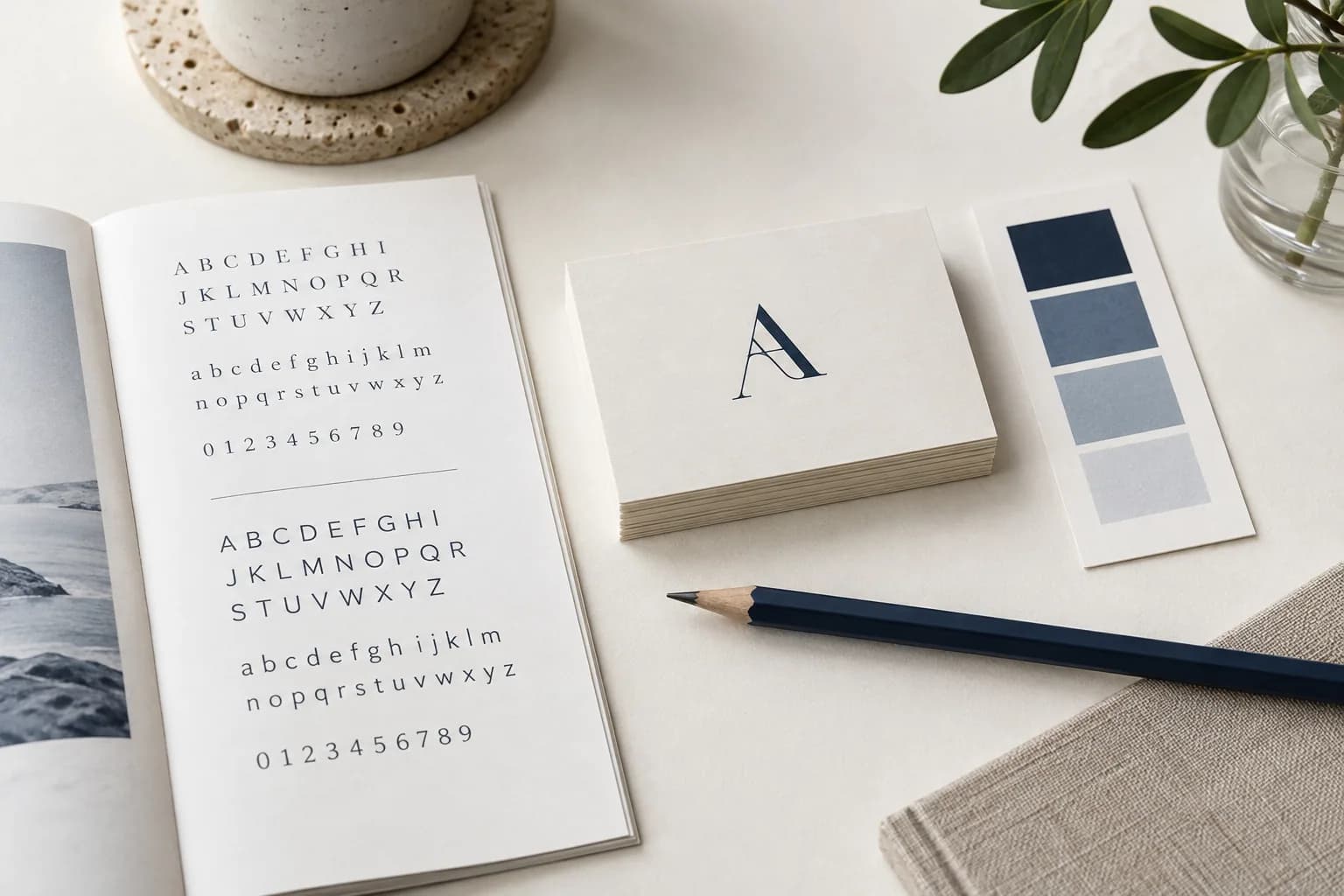
Explore how colour, typography, imagery and layout support the message as a group. Try the identity in a dense document as well as a large cover. Check how the logo behaves at a small size and how important text reads against the chosen backgrounds.
Document the decisions that another person needs to repeat: spacing, colour combinations, image direction and the roles of different type sizes. Include examples of common mistakes. A short, specific guide can be more useful than a large presentation with few everyday applications.
Start with the assets your team actually makes
Ask marketing, sales and operations which materials they recreate regularly. Prioritise templates for those jobs: a presentation, proposal cover, announcement or social post. Include guidance on what can change and what should remain consistent across versions.
Try each template with long copy, a different image and a less familiar author. That exercise reveals whether the system supports real content or only the original sample. Keep editable source files and approved exports together so people can find the right starting point.
Plan a rollout people can follow
List the places where the identity appears and decide the order of updates. Begin with the touchpoints customers encounter most often. Give each item an owner and record where older assets will remain temporarily, rather than assuming everything changes on one launch day.
Create a simple process for reviewing new work and updating the guidelines. Notice which questions the team repeatedly asks. Improve the templates or examples in response, so brand consistency becomes part of the workflow instead of a final correction before publication.
Put the thinking into practice
Ready for your next step?