
Financial Data Engineering & Wealth Management Technology / Case study
PCR Insights.
Engineering trusted financial data for smarter wealth management.
Financial data aggregation, processing and reconciliation that connect complex investment information with wealth management reporting.
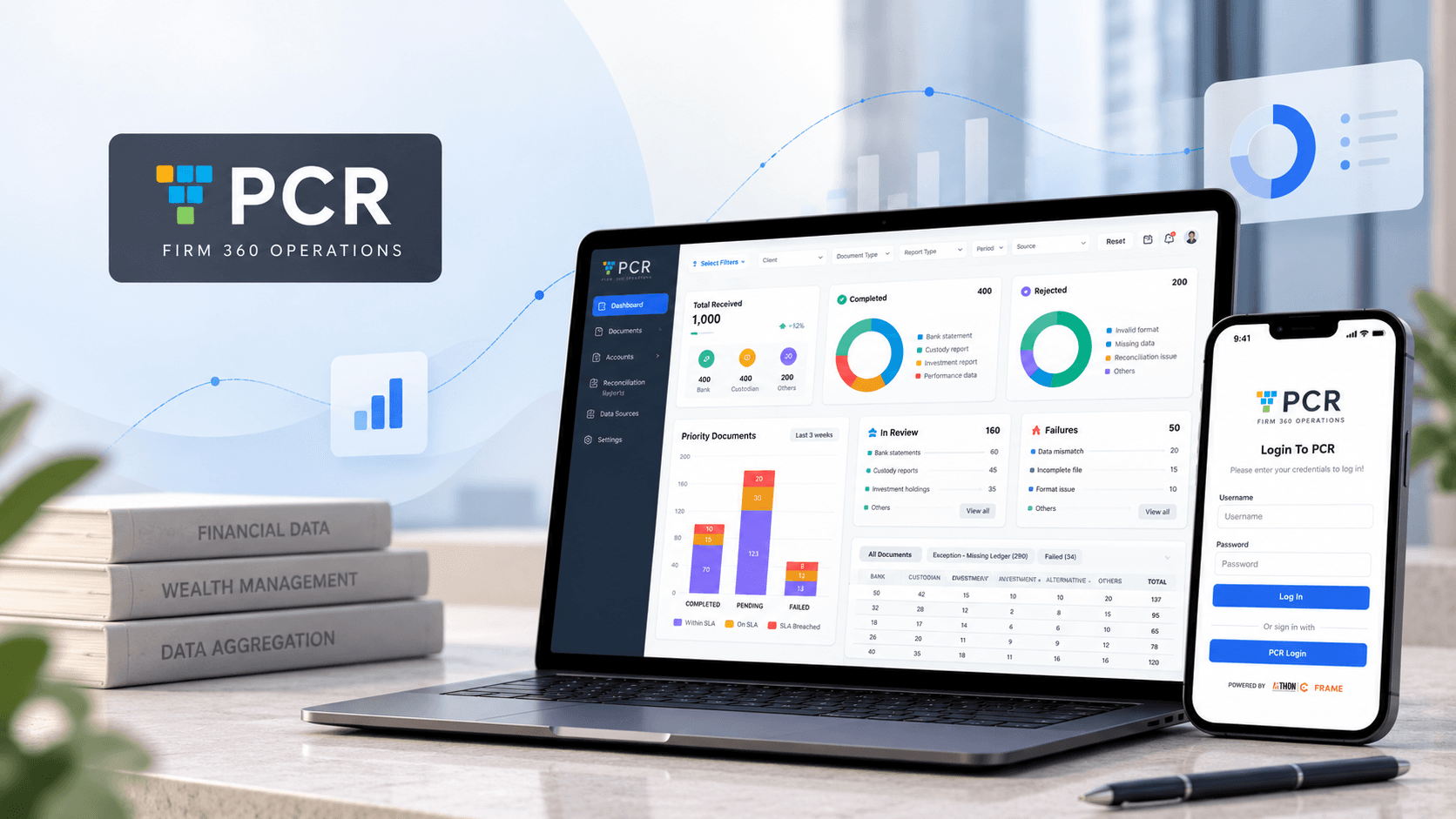
- Financial firms using PCR
- 300+
- Investment accounts supported by PCR
- 150,000+
These figures represent PCR’s publicly reported platform scale, not results attributable solely to Engross. Source: PCR Insights (opens in a new tab)
- The challenge
- Wealth management organizations work with information distributed across banks, custodians, investment managers and alternative investment providers. Data arrives through feeds, statements, spreadsheets and documents. Bringing it together requires consistent collection, transformation, validation and exception handling before it can support portfolio reporting and investment analysis.
- The data approach
- PCR combines technology and data operations to collect, normalize, validate and reconcile investment information. Structured workflows prepare consistent datasets for downstream reporting and analytics, while specialist review helps resolve incomplete records and processing exceptions.
Financial data workflows
- Requirements analysis: understand financial data sources, business rules and downstream reporting needs.
- Data aggregation: collect investment information from supported feeds, financial institutions and approved document sources.
- Integration: connect source interfaces, internal services and downstream financial applications.
- Transformation and processing: standardize different formats, fields and financial structures into consistent datasets.
- Validation: check completeness, consistency and expected business rules before publishing information.
- Reconciliation: compare records and investigate missing information, duplicates, mismatched values and exceptions.
- Operational support: coordinate recurring processing, troubleshooting and changes to source systems.
- Continuous improvement: adapt workflows to evolving requirements, integration interfaces and operational feedback.
From financial source to trusted investment data
- Source identification
- Data collection
- Data extraction
- Data transformation
- Data validation
- Reconciliation
- Data publishing
- Portfolio intelligence
About the client
PCR Insights, also known as Private Client Resources, specializes in investment data aggregation, reconciliation and consolidated reporting for family offices, wealth advisors, banks and wealth technology providers.
Its platform brings together traditional investments, alternative assets and custodial information, preparing data for portfolio visibility and integration with third-party reporting systems.
The operating model
Financial domain expertise defines the information requirements and processing standards. Collection and transformation workflows prepare recurring data, while validation and reconciliation identify records that need further investigation.
Engineering and operations work together to address source changes, processing failures and integration requirements. Reviewed information is then prepared for downstream applications, portfolio reporting and analysis.
Business value
- Unified financial data
- Bring investment information from multiple providers into a consistent structure for reporting.
- Repeatable processing
- Standardized collection and transformation support recurring financial data workflows.
- Data quality
- Validation and reconciliation help identify inconsistencies before information reaches downstream systems.
- Integration flexibility
- Connect financial sources with internal platforms and third-party reporting applications.
- Operational visibility
- Defined review and exception-handling steps help teams coordinate processing and corrections.
- Adaptability
- Adjust workflows as source formats, interfaces and business requirements change.